Education
What is Shilajit? Everything you need to know before you buy.
Thousands of years of Ayurvedic tradition. One naturally formed substance. Here's the honest, no-marketing-spin guide to what Shilajit actually is, where it comes from, and why purity matters more than price.
- Feb 11, 2026
- 3 min.
- Purevie Editor
What is Shilajit?
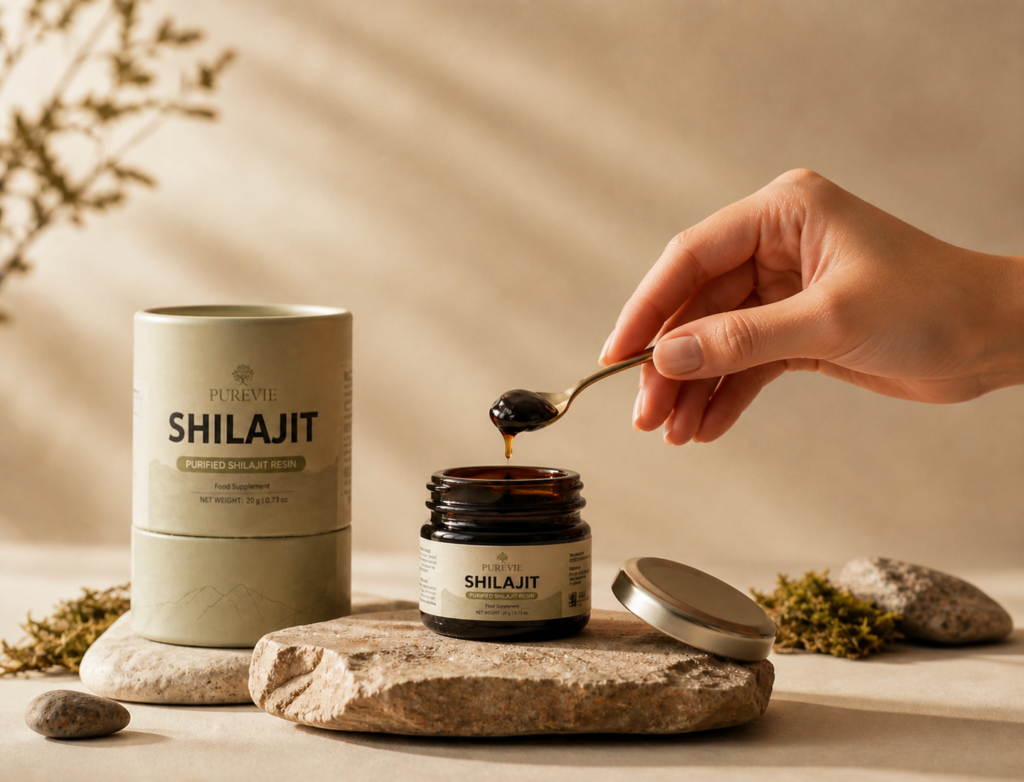
Shilajit is a dark, mineral-rich resin found high in the Himalayas and other mountain ranges. It forms naturally over thousands of years from the slow compression and breakdown of plant matter. Highly valued in traditional Ayurvedic medicine for centuries, it is now widely used as a dietary supplement.
Where Does Shilajit Come From?
Authentic Shilajit forms in specific high-altitude mountain environments, typically above 1,000 metres, where the conditions of pressure, temperature, and mineral-rich geology create the right circumstances for its gradual formation. The most historically significant sources are in the mountain regions of Northern India, the Himalayas, and areas of Central Asia.
Not all Shilajit on the market is sourced from these authentic regions. Some products use lower-grade material from lower altitudes, or mix in cheap fillers to extend volume. When evaluating any Shilajit product, the sourcing origin is the most important question to ask.
Purevie Shilajit is responsibly sourced from high-altitude mountain regions of India, collected by experienced local partners following sustainable, traditional harvesting practices.
How is Shilajit Purified?
Raw Shilajit collected from mountain rock faces must be purified before it is safe or suitable for human consumption. This is non-negotiable, raw, unpurified Shilajit may contain heavy metals, fungal contaminants, and other impurities that must be removed.
There are two broad approaches to purification:
modern/commercial processing and traditional Ayurvedic methods.
1. Commercial Processing
Many mass-market Shilajit products are processed using industrial filtration and chemical extraction methods. These are fast and cheap, but they can strip out natural compounds and leave behind traces of processing agents.
2. Traditional Ayurvedic Purification
Classical Ayurvedic texts prescribe specific purification methods using natural substances. Purevie uses triphala concoction, a preparation referenced in Rasatarangini AFI-I, one of Ayurveda's foundational texts. This method removes impurities while preserving the natural composition of the Shilajit. It is more time-consuming and more expensive than industrial processing. We do it anyway, because the end product is better.
Purified Shilajit Resin
Shilajit sourced from the high-altitude mountain regions of India. Purified the traditional Ayurvedic way.
- £19.99
- 20g Jar
Shilajit Honey Sticks
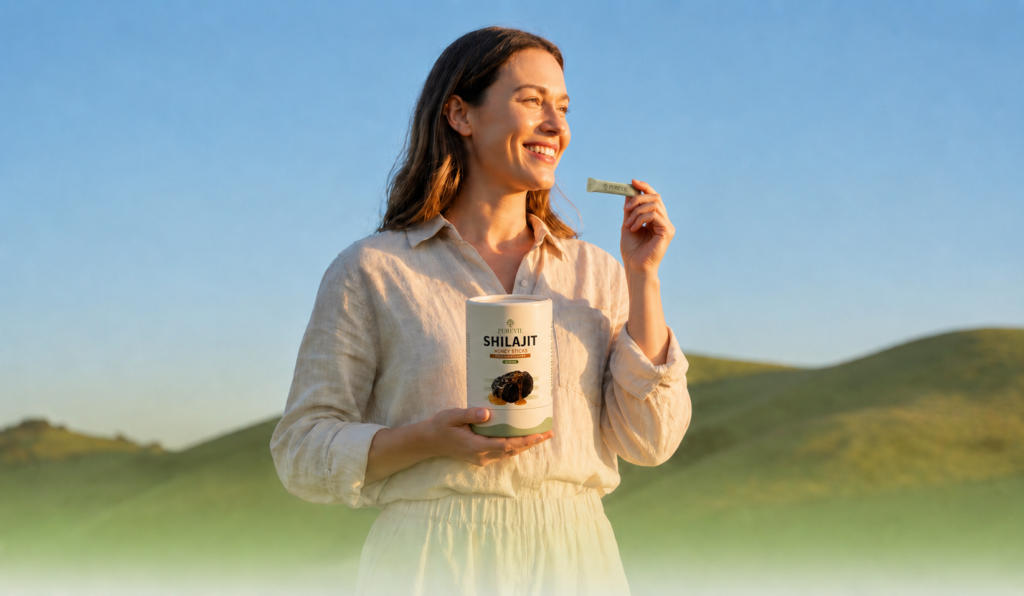
Responsibly sourced Shilajit blended with organic honey, sealed in 30 individual daily sticks. Tear it open. Take it and done.
- £24.99
- 30 Sticks
What to Look for When Buying Shilajit?
With any naturally sourced supplement, quality depends entirely on sourcing and preparation. Here is what to look for in a trustworthy Shilajit product:
- Specific Sourcing: Clearly names the exact region and uses responsible harvesting practices.
- Disclosed Purification: Relies on traditional purification methods rather than industrial shortcuts.
- Minimal Ingredients: Pure Shilajit requires zero unnecessary additives or binders.
- GMP Certified: Manufactured to strict, non-negotiable quality standards.
- Batch Tested: Every single batch is verified for authenticity, purity, and safety.
- Company Transparency: Clear information about who the brand is and where they operate.